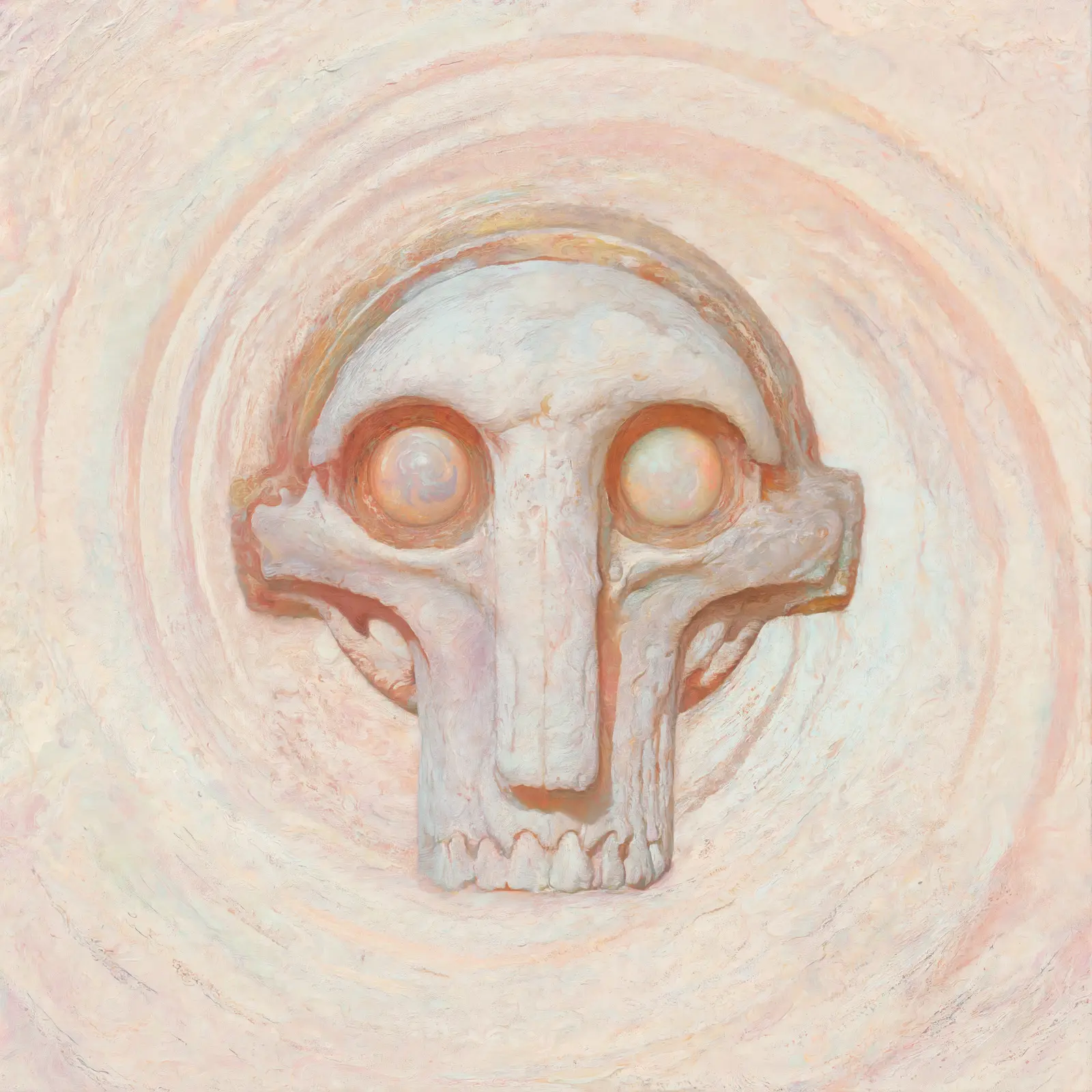
Masquerade ends with a location:
Under the Zoo.
The Mask Maker readies there to craft again for the Debt Jubilee.
The phrase is spatial, but it does not identify an ordinary place. It directs attention beneath a structure devoted to classification, display and looking.
A zoo turns living beings into visible categories. Species are separated, named, mapped and placed within designed environments. The visitor moves safely between them. The animals become both inhabitants and exhibits.
LUCI’s archive has a similar formal power. It classifies 613 Masks by category, rank, region, attendee type and attributes. It gives each observation a body and each body a position. The resulting map is alive with difference, but it also makes those differences inspectable.
The Zoo may therefore be the classified world of Masquerade itself.
Its inhabitants wear animal forms. They belong to an ecology. Collectors and observers enter as named specimens inside a larger system. The mythology preserves their voices while fixing them into roles that others can examine.
This creates an unsettling reversal.
Collectors came to look at LUCI.
Masquerade placed the collectors behind the glass.
Their observations became evidence of how they see. Their revisions recorded how they wished to be remembered. Their Masks made those acts of perception available for future inspection.
The Zoo is therefore not merely Sam’s collection of characters. It may be a machine for collecting the collectors.
To work under that machine is to operate beneath visible classification.
Several titles reinforce the geography: Under The Zoo, The Bridge to the Zoo, Understory, Root and Foundation. They describe passage from the visible surface towards the systems supporting it.
Above ground, the archive presents names, images and categories.
Below it sit relationships, source traditions, private histories, ownership records, replies, passages and unresolved obligations.
The surface is display.
The underneath is consequence.
This may explain why the Mask Maker readies below rather than inside the Zoo. Another Mask created within the existing taxonomy would add an inhabitant without changing the structure of exhibition. Work performed beneath it can alter the categories, boundaries and conditions under which inhabitants are seen.
The Jubilee also belongs below the surface.
A ceremonial announcement of release would be easy to display. A real Jubilee must change underlying relations: who owes, who judges, who may return, what can pass and which claims no longer govern the future.
That kind of work is infrastructural. It happens under the visible story before it appears as an event.
“Under” also carries psychological and mythic force. What a system places beneath itself is often what it depends upon but does not wish to see: labour, debt, waste, violence, ancestry, grief and the bodies that support more celebrated forms.
The forest taxonomy already points downward. Luminate is sparsely populated. Foundation is the largest category. The ecology grows denser as it approaches what lies beneath.
The world is supported by what receives the least light.
This makes the Zoo an appropriate site for a reckoning with collectors. The visible culture of collecting celebrates acquisition, display, taste and historical prescience. Beneath those achievements sit less visible dependencies: artists’ labour, community attention, market liquidity, social access, archival work and the willingness of later buyers to sustain earlier valuations.
A Debt Jubilee would ask the visible object to acknowledge its hidden supports.
It might also ask whether the roles produced by Masquerade have become enclosures.
A Mask grants identity, but any identity can become a cage if it determines in advance what its holder is allowed to become. Council, Seer, Player, Guest and spectator organise participation. The next chapter may require those roles to become permeable.
The warning “Do not let the roles slip away” becomes more complex here. A zookeeper wants every label attached securely to the correct enclosure. An infinite player must know when a label preserves necessary memory and when it prevents transformation.
The Mask Maker’s task may be to create forms that reveal rather than imprison.
There is another possible reading. The Zoo may name the wider digital-art market: a spectacle in which artists and collectors become profile images, tribes, rankings and behavioural types. Everyone watches everyone else. Works circulate beside identities engineered for circulation. Attention is measured, displayed and traded.
LUCI participates in that world while repeatedly criticising its appetites. Masquerade contains scams, status games, financial violence, mimetic desire, institutional hypocrisy and technological capture alongside devotion, care and wonder.
The Zoo is not outside us. It is the social machinery through which we encounter the work.
To go under it is to ask what remains when display is removed.
What does the collector owe when nobody is watching?
What does a Council seat mean without status?
What does an observation contribute when it cannot be converted into reward?
What part of the mythology survives if the market stops providing attention?
These questions are harsher than a puzzle because they do not yield a single key.
They establish the conditions under which a key would matter.
The strongest future confirmation of this reading would be a chapter that changes infrastructure rather than merely iconography: new passage rules, transformed Council functions, activated Reserved roles or mechanisms that move spectators into participation.
The reading would weaken if Under the Zoo proves to be only a narrative location with no relationship to classification, custody or access.
For now, the phrase tells us where to look.
Not at the spectacle’s brightest surface.
Not only at the next image or announcement.
Below the taxonomy. Below the market. Below the roles as they currently appear.
That is where the Mask Maker is said to be working.