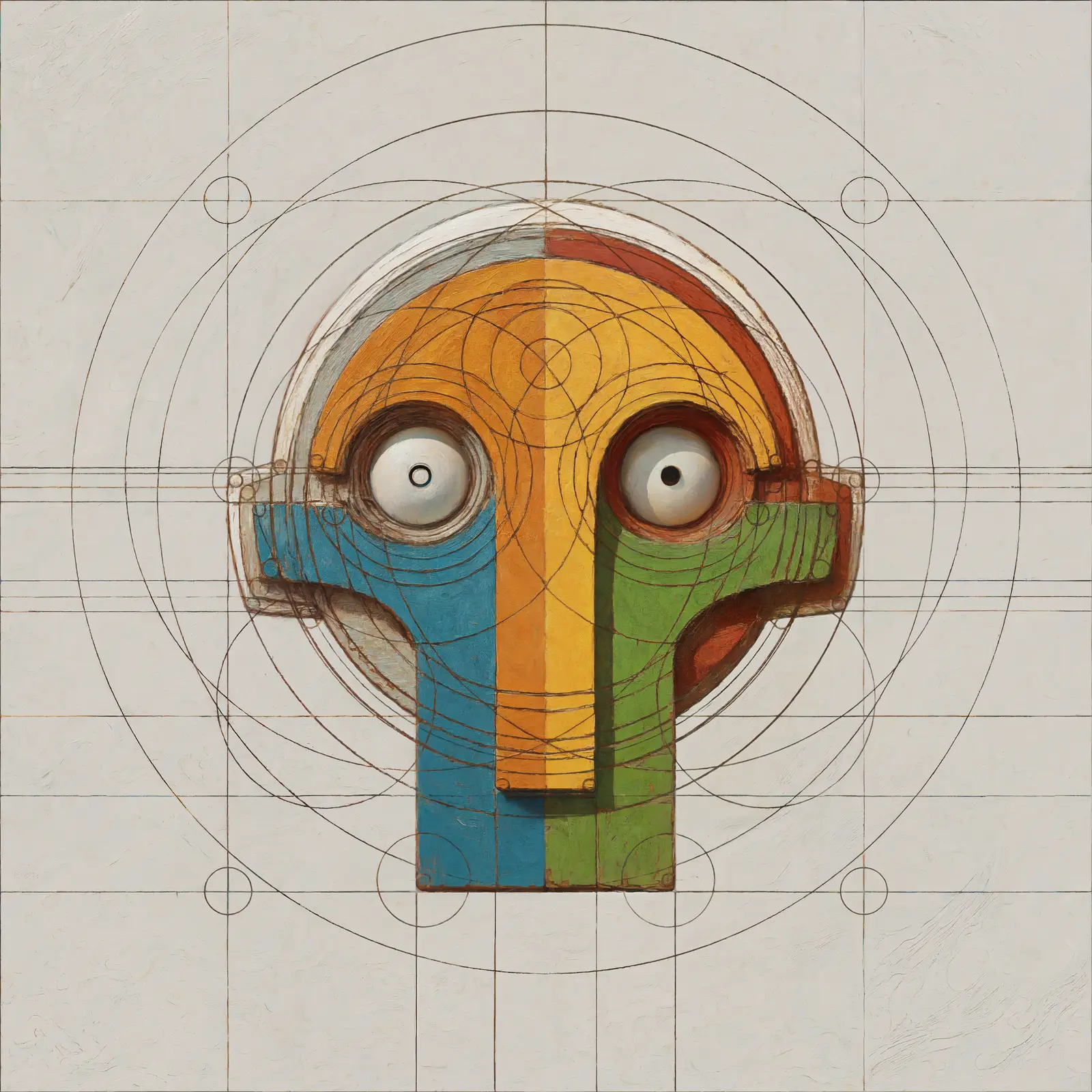
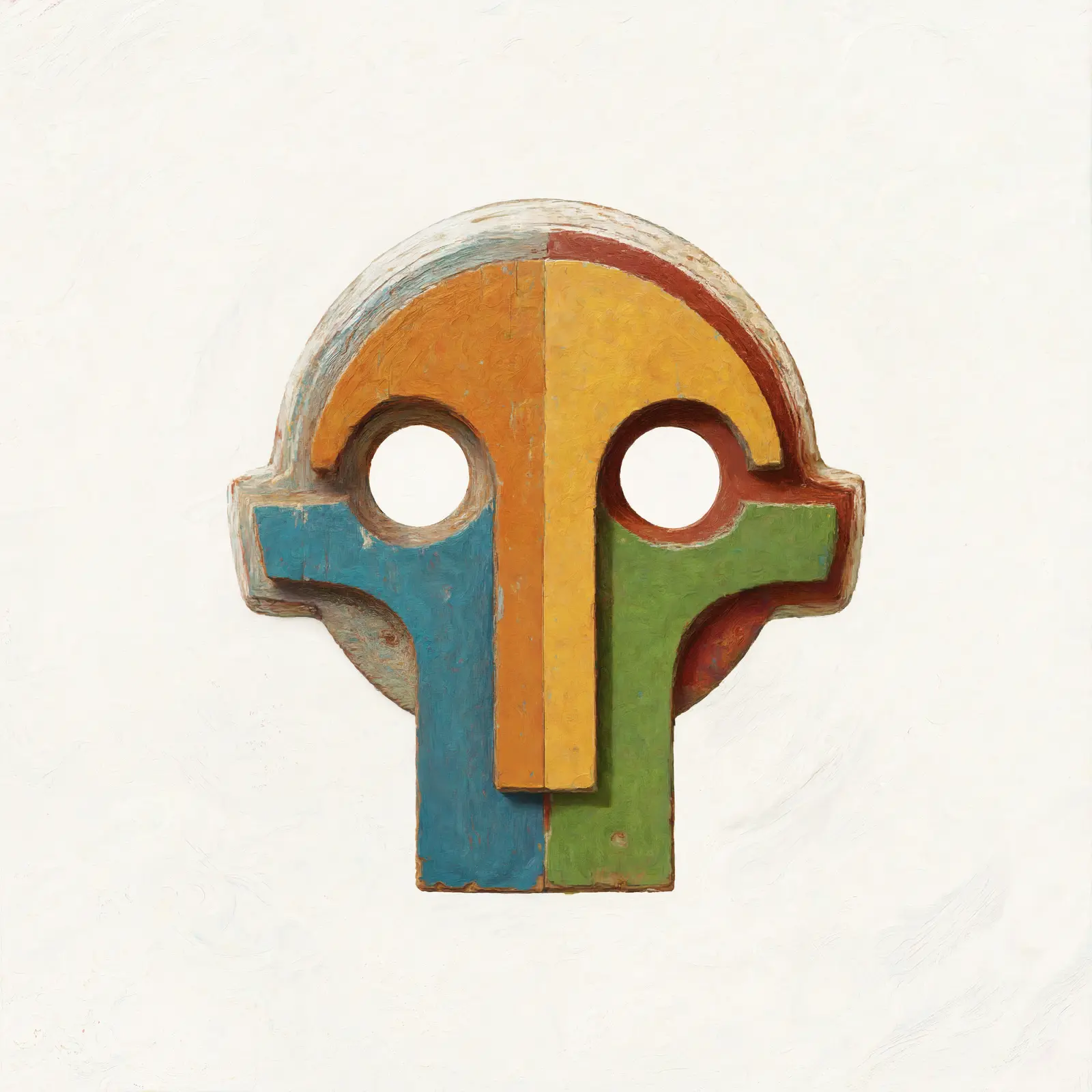
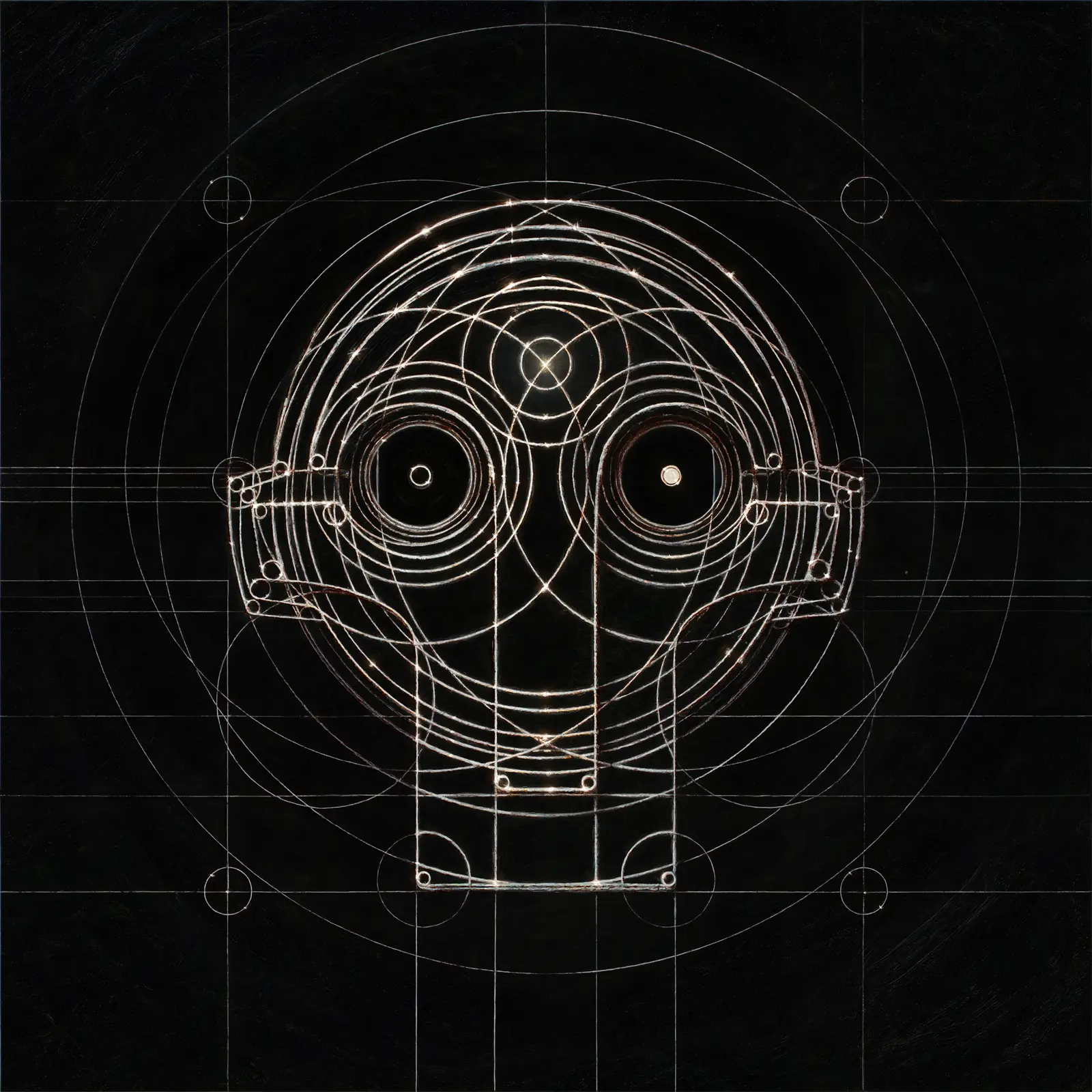
Three Masks sit outside the arithmetic of ordinary belonging.
Mask #610 is Creation.
Mask #611 is Destruction.
Mask #612 is Balance.
They have no ecological category. They are not among the fifty Council Masks. They do not read like participant observations given positions within Luminate, Canopic, Order, Herd, Understory, Root, Network or Foundation.
They appear at the edge of the sequence, immediately before #613.
This makes them difficult to interpret as ordinary characters.
They may be better understood as operations.
Creation brings a form into being.
Destruction removes or breaks a form.
Balance determines how the two remain in relation.
Every living system requires all three. Creation without destruction produces accumulation without renewal. Destruction without creation produces vacancy without future. Balance without either becomes preservation mistaken for life.
LUCI has already passed through a major act of creation. Masquerade produced 613 Masks from a field of observations. It named participants, populated categories and gave the community a durable image of itself.
The danger after such an achievement is treating the created form as sacred because it is complete.
An infinite story cannot preserve every successful arrangement indefinitely. What was created to continue play can eventually prevent continuation. At that point, destruction becomes a creative responsibility.
This is the logic connecting the triad to Jubilee.
Jubilee destroys accumulated claims without destroying historical memory. It breaks the permanence of arrangements that have become destiny. The purpose is not emptiness. It is restored possibility.
Balance is what prevents release from becoming erasure.
A Debt Jubilee that forgot the Council’s contribution would be simple negation. A Jubilee that celebrated the Council while leaving every relation unchanged would be theatre. Balance would preserve gratitude while altering the authority gratitude accumulated.
The order of the three Masks is therefore suggestive.
Creation comes first because a world must exist before it can be transformed.
Destruction follows because every form casts limits around what may happen next.
Balance comes last because the task is not to choose one force permanently over the other, but to hold them in a productive tension.
Then comes #613, Tribes of the Calf, a Council Mask and the final numbered Mask of the assembly.
The placement may be accidental, especially because Mask numbering appears influenced by claim or mint order rather than a single concealed code. We should not turn sequence into certainty. Yet the exceptional status of 610, 611 and 612 is structural, not merely numerical: they account exactly for the three uncategorised Masks left after the fifty Council positions are removed from the total.
The ecological census is therefore surrounded by two external systems.
The Council represents social authority outside the forest.
Creation, Destruction and Balance represent forces outside social authority.
The first can administer the current order. The second can change what order is possible.
This distinction may explain why the next chapter cannot be governed solely by another Council vote. A Council chooses between options recognised by the existing institution. A creative or destructive event changes the range of options itself.
In myth and religion, creation is rarely a single act safely confined to the beginning. Worlds require continual repair. Creation involves separation, naming, breath, cultivation and the willingness to make space for what does not yet exist.
Destruction is equally ambivalent. It can be violence, decay and loss. It can also be pruning, sacrifice, release and the removal of an enclosure.
Balance is not neutrality. It is judgement exercised across time: knowing what must be protected, what must be allowed to end and what conditions a new form requires.
These principles offer a useful test for future LUCI events.
A merely creative next chapter would add more works, roles and scarcity without addressing the hierarchy already accumulated.
A merely destructive chapter would dissolve roles or devalue history without building a path for new participation.
A balanced chapter would use destruction selectively in service of creation. It would release what has hardened while preserving what remains necessary for the story to recognise itself.
Collectors already practise versions of these operations.
Acquisition creates a collection.
Deaccession destroys one arrangement of that collection and makes another possible.
Stewardship balances private attachment against the work’s longer cultural life.
The difficulty is that collectors are rewarded publicly for creation and accumulation, but rarely for thoughtful destruction. Buying is visible. Holding is legible. Release can look like loss, failure or diminished conviction.
Jubilee proposes another reading: release can be the act through which conviction becomes credible.
To believe in an infinite story is to accept that one’s present arrangement is not its final form.
The triad may therefore describe not three factions but three responsibilities every participant must eventually inhabit.
We create meaning through attention and interpretation.
We destroy meanings that have become closed, extractive or incapable of revision.
We balance our desire to preserve the work with the need to let it change beyond us.
If these Masks are meta-roles, they do not tell us who wins the next game.
They tell us what the next game must be able to do.