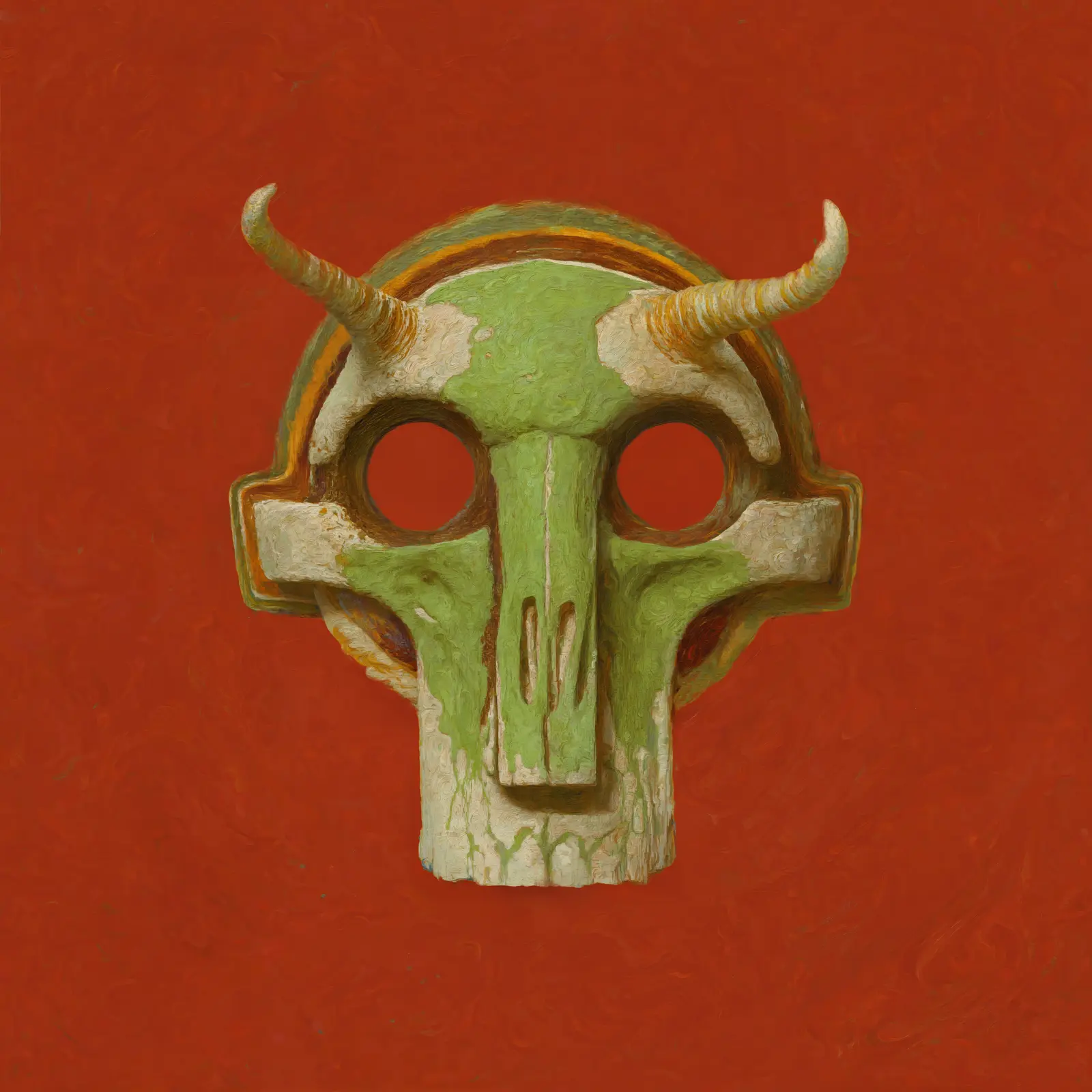
Mask #561 carries an alarming title: The Council Killer.
Read literally, it invites melodrama. Read structurally, it names a more interesting possibility.
The Council may need to die without any of its members disappearing.
Institutions are made from people, but they are not identical to those people. An institution is a pattern of permissions, expectations and relationships. It decides who may judge, who may enter, what counts as contribution and how authority reproduces itself.
That pattern can end while the people inside it remain.
The distinction matters because criticism of hierarchy easily becomes criticism of individuals. The Council’s historical contribution is documented. Its members supported the earliest works, advised Sam, devoted time to participatory chapters and helped select recipients. The argument for transformation is not that this labour was false or corrupt.
It is that a role designed for one phase may obstruct the next if preserved unchanged.
The Council’s old function belonged to finite games. Contests required bounded participation, adjudication and recognised outcomes. Someone had to evaluate submissions. Someone had to carry institutional memory between chapters. The Council supplied continuity and judgement.
An infinite game asks a different question: what happens when the authority that enabled participation begins to limit who can meaningfully participate?
Carse’s answer is that the rules must change before a finite outcome closes the field. In LUCI, that may require the judges to enter the game they previously supervised.
The Council Killer can therefore be understood as a role-killer.
It kills the distance between Council and ecology.
It kills the assumption that historical recognition guarantees permanent authority.
It kills the idea that gratitude can only travel from artist to early patron.
It kills the safety of judging consequences one does not personally have to endure.
Several different transformations could fulfil that logic.
The Council could dissolve as a formal body while its members retain their works and individual relationships.
It could remain intact but lose its exclusive adjudicative function.
Its members could nominate successors or activate new participants.
Seats could become passages rather than permanent identities.
Council holders could enter a future event as players whose own roles are at risk.
Or authority could be converted into service: preserving context, mentoring observers and opening access rather than determining winners.
These possibilities are not equivalent. Some would be symbolic; others would materially redistribute power. The archive does not tell us which, if any, will occur.
What it does tell us is that the next Council role will be unlike the previous ones. Repeating another vote would not satisfy that description. A genuine transformation must alter the relation between Council, artist and field.
The title also sits within a cluster of suggestive Masks: Forgotten Roles, Judge’s Mandatum, Proxy Judge, Council Gossip, The Release, Transfer of the Path and The Gift of Sacrifice. Titles alone cannot be arranged into an official sequence. Together they describe the pressures surrounding institutional change: memory, delegated authority, informal power, relinquishment and passage.
“Do not let the roles slip away,” Masquerade warns.
That line can be read conservatively as a plea to remember established functions. It can also mean that roles are already moving and must be followed carefully. A role slipping away from its current holder is not necessarily being lost. It may be passing into another form.
The danger is romanticising destruction.
Removing a Council does not automatically create openness. Informal influence can become less accountable than formal authority. A public vote can be captured by popularity. A market can replace judgement with purchasing power. A vacuum can reward those best able to perform visibility.
The question is not whether hierarchy exists. Every cultural system produces distinctions. The question is whether those distinctions remain answerable to the continuation of the culture.
An infinite institution must be capable of revising itself without destroying the memory it was built to carry.
That suggests the Council’s most valuable asset may not be its voting power. It may be its memory.
Council members remember how early decisions were made, which relationships sustained the work and what previous chapters demanded from participants. If their role changes, that knowledge should not vanish. It should become transmissible.
The strongest form of Council death would therefore preserve history while ending monopoly over its interpretation.
This resembles succession in a living tradition. Elders do not remain elders by preventing adulthood in everyone who follows. Their authority matures when it becomes capable of producing new custodians.
The same principle applies to collectors more broadly. A collection can become a private monument to one person’s discernment, or it can become infrastructure through which works, context and opportunities pass to others.
The first preserves possession. The second preserves culture.
The Council Killer may be the figure that forces that choice into view.
If the coming Jubilee concerns release, the Council is where release would carry the greatest symbolic force. Those who received the first gifts are best positioned to demonstrate what a gift becomes when it is no longer travelling towards them.
This need not mean compulsory transfer. Forced play is not play in Carse’s sense. An infinite act must be undertaken freely.
That freedom is precisely what gives sacrifice meaning. Something surrendered under threat is payment. Something released voluntarily because continuation matters more than possession becomes an offering.
The Council Killer may therefore be neither enemy nor executioner.
It may be the name of the Council’s final act in its old form: choosing to end the role before the role becomes incapable of ending itself.
The people remain.
The gratitude remains.
The history remains.
What dies is the belief that the shape taken by that history in one chapter must govern every chapter that follows.